
Cancer Screening: Complete Guide to Early Cancer Detection and Prevention

Cancer Screening Tests and Guidelines for Early Cancer Detection
Learn how cancer screening helps detect cancer early, understand age-wise screening guidelines, interpret results confidently, and improve treatment outcomes through timely detection.
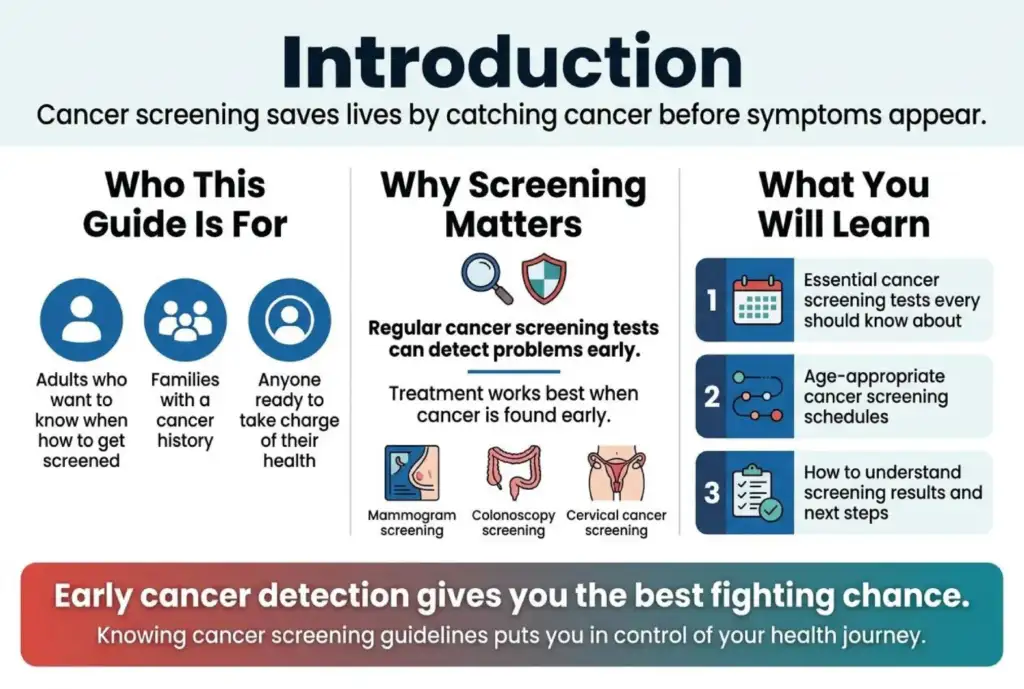
Cancer screening saves lives by catching cancer before symptoms appear. This guide is for adults who want to understand when and how to get screened, families with cancer history, and anyone ready to take charge of their health.
Regular cancer screening tests can detect problems early when treatment works best. Dr Priyansh Jain, a cancer specialist in Surat, sees patients every day who benefit from catching cancer in its earliest stages through mammogram screening, colonoscopy screening, and cervical cancer screening.
We’ll walk through the essential cancer screening tests every adult should know about, break down age-appropriate cancer screening schedules that match your life stage, and help you understand your cancer screening results so you feel confident about your next steps. Early cancer detection gives you the best fighting chance, and knowing cancer screening guidelines puts you in control of your health journey.
Essential Cancer Screening Tests for Early Detection
Breast Cancer Mammography Guidelines
Women between ages 40-50 should discuss mammography with their healthcare provider, while those 50-74 require screening every two years. Annual mammograms may benefit high-risk individuals with family history or genetic mutations. Digital mammography and 3D tomosynthesis improve cancer screening accuracy, detecting tumors before physical symptoms appear.
Cervical Cancer Pap Smear Recommendations
Regular cervical cancer screening begins at age 21 with Pap smears every three years. Women 30-65 can choose Pap tests every three years or HPV testing every five years. Co-testing combines both methods for enhanced early cancer detection. Screening guidelines vary based on previous results and risk factors.
Colorectal Cancer Screening Options
Colonoscopy screening every 10 years starting at age 45 remains the gold standard for colorectal cancer detection. Alternative cancer screening tests include stool-based tests annually, CT colonography every five years, or flexible sigmoidoscopy every five years. High-risk patients may need earlier or more frequent screening based on family history.
Age-Appropriate Screening Schedules That Save Lives
Screening Recommendations for Adults 20-39
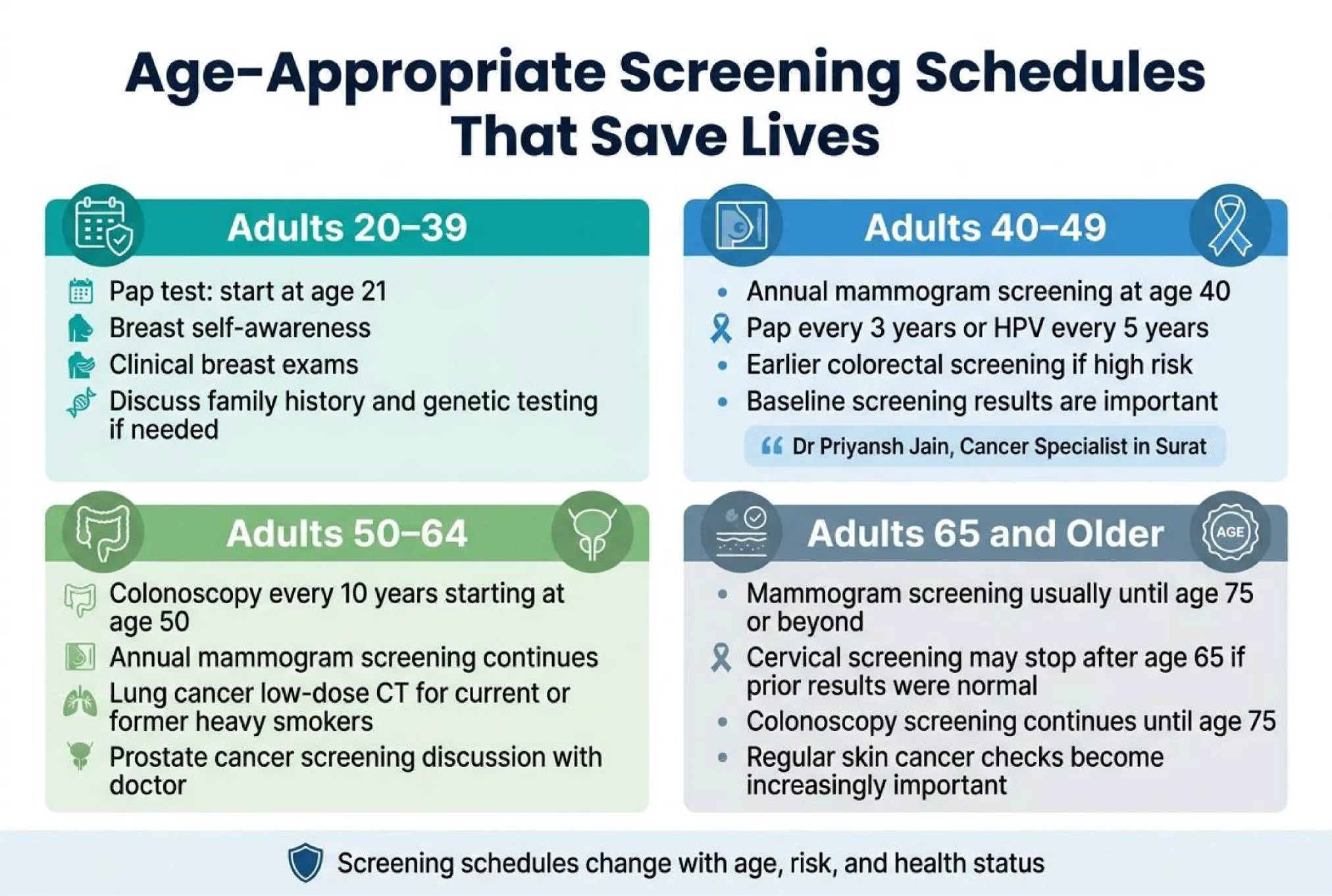
Cancer screening guidelines for young adults focus primarily on cervical cancer screening and breast self-awareness. Women should begin cervical cancer screening with Pap tests at age 21, regardless of sexual activity. Breast self-exams help establish familiarity with normal breast tissue, while clinical breast exams by healthcare providers detect early changes. Men and women should discuss family history with their doctors to determine if genetic testing or earlier screening protocols are necessary for hereditary cancer syndromes.
Critical Screenings for Adults 40-49
The forties mark a crucial decade for expanding cancer screening tests. Women should begin annual mammogram screening at age 40 to detect breast cancer early when treatment is most effective. Cervical cancer screening continues with Pap tests every three years or HPV testing every five years. Both men and women with higher risk factors may need earlier colorectal screening. Dr Priyansh Jain, Cancer Specialist in Surat, emphasizes that establishing baseline screening results during this decade creates important reference points for future comparisons.
Comprehensive Screening Plan for Ages 50-64
This age group requires the most comprehensive cancer screening schedule. Colonoscopy screening becomes essential every 10 years starting at age 50 for average-risk individuals. Women continue mammogram screening annually while cervical screening may extend to longer intervals based on previous results. Lung cancer screening with low-dose CT scans is recommended for current or former heavy smokers. Prostate cancer discussions between men and their doctors should begin, considering individual risk factors and family history for personalized screening decisions.
Continued Vigilance for Adults 65 and Older
Cancer screening guidelines for older adults balance early cancer detection benefits with overall health status and life expectancy. Mammogram screening typically continues until age 75 or beyond based on individual health. Cervical cancer screening may stop after age 65 if previous results were consistently normal. Colonoscopy screening continues until age 75, with decisions beyond that based on previous findings and overall health. Regular skin cancer checks become increasingly important as skin cancer risk rises with cumulative sun exposure over decades.
Interpreting Your Screening Results with Confidence
Understanding Normal vs Abnormal Results
Cancer screening results typically fall into three categories: normal (negative), abnormal (positive), or inconclusive. Normal results mean no signs of cancer were detected, but this doesn’t guarantee you’re cancer-free forever. Abnormal results don’t automatically mean cancer – they indicate areas requiring closer examination. Many factors like inflammation, infections, or benign growths can trigger abnormal findings. False positives occur when tests suggest cancer but none exists, while false negatives happen when cancer is present but missed. Understanding these nuances helps reduce panic and promotes informed decision-making about your health.
Next Steps When Additional Testing is Needed
When cancer screening results interpretation reveals abnormalities, your doctor will recommend follow-up procedures based on the specific findings. These might include repeat screening tests, diagnostic imaging like CT or MRI scans, or tissue biopsies for definitive diagnosis. Timing varies – some require immediate attention while others can wait weeks or months. Create a clear action plan with your healthcare team, including appointment schedules and preparation instructions. Keep detailed records of all tests and results. Ask about timeframes for receiving results and who will contact you. Don’t hesitate to seek a second opinion, especially for complex or concerning findings.
Managing Anxiety About Test Results
Waiting for cancer screening results can trigger intense anxiety, but several strategies help manage these feelings. Practice deep breathing exercises, maintain regular sleep schedules, and stay physically active to reduce stress hormones. Limit internet searches about potential diagnoses, as this often increases worry unnecessarily. Instead, write down questions for your doctor and focus on factual information from reliable medical sources. Connect with supportive friends or family members, or consider counseling if anxiety becomes overwhelming. Remember that most abnormal screening results don’t indicate cancer. Dr Priyansh Jain, Cancer Specialist in Surat, emphasizes that early detection through regular screening significantly improves treatment outcomes when cancer is actually present.
Conclusion
Cancer screening can be the difference between catching cancer early when it’s most treatable and facing a much tougher fight down the road. Regular screenings like mammograms, colonoscopies, and Pap smears aren’t just medical recommendations—they’re your best defense against letting cancer sneak up on you. Following age-appropriate guidelines means you’ll get tested at the right times, giving you the highest chance of spotting any problems before they become serious.
Don’t let fear or confusion about test results keep you from taking charge of your health. Talk with your doctor about which screenings you need and when, and make sure you understand what your results mean. Schedule those appointments, mark them on your calendar, and treat them as non-negotiable commitments to yourself. Your future self will thank you for taking these simple but powerful steps today.
Also read,
Dr Priyansh Jain
Surgical Oncologist (Oncosurgeon)
Naman Cancer Clinic & Research Centre, Surat
Also read: Advanced Oncoplastic Breast Surgery with LICAP & LTAP Flaps
Also read: Breast Conservation Surgery with MICAP Flap Reconstruction for Breast Cancer