Skin, Soft Tissue and Bone Cancer Treatment in Surat
Understanding Skin Cancer, Soft Tissue Sarcoma and Bone Tumour Treatment, Surgery and Recovery
Introduction
Skin, Soft Tissue and Bone Cancer Treatment in Surat depends on the exact type of tumour, its location, size, stage, whether it has spread, and the patient’s overall health. Skin cancers, soft tissue sarcomas and primary bone cancers are different groups of diseases, so their diagnosis and treatment can vary significantly.
Treatment may involve surgery, radiation therapy, chemotherapy, targeted therapy, immunotherapy or a combination of these approaches. For soft tissue sarcoma, surgery is commonly an important part of treatment, while radiation or other therapies may be used before or after surgery in selected patients.
For primary bone cancer, treatment may include surgery, chemotherapy, radiation therapy, cryosurgery or targeted therapy depending on the cancer type, size, location and stage.
At Naman Cancer Clinic & Research Centre, Dr. Priyansh Jain provides surgical oncology care and individualized treatment planning for patients with different types of cancers and tumours in Surat.
What Are Skin, Soft Tissue and Bone Tumours?
The terms skin tumour, soft tissue tumour and bone tumour describe tumours that develop in different parts of the body.
Skin Tumours
Skin tumours develop in the skin. Some are benign, while others are cancerous.
Common skin cancers include:
- Basal cell carcinoma
- Squamous cell carcinoma
- Melanoma
- Other less common skin cancers
Treatment depends on the specific type, size, location and stage of the skin cancer.
Soft Tissue Tumours
Soft tissues include structures such as:
- Muscles
- Fat
- Tendons
- Ligaments
- Blood vessels
- Lymphatic tissues
- Nerves
- Connective tissues
Soft tissue sarcomas are cancers that develop from these types of tissues. They can occur in many parts of the body.
Bone Tumours
Bone tumours develop within or from bone tissue.
Some bone tumours are benign, while primary bone cancers are malignant. Bone cancer is different from cancer that has spread to the bone from another organ.
What Is Soft Tissue Sarcoma?
Soft tissue sarcoma is a group of cancers that begin in soft tissues.
These tumours can develop in areas such as:
- Arms
- Legs
- Abdomen
- Chest
- Pelvis
- Head and neck
- Trunk
- Retroperitoneum
There are many different types of soft tissue sarcoma, and treatment depends on the specific pathology and stage.
NCI states that soft tissue sarcomas can develop in many parts of the body and that biopsy is used to diagnose them.
What Is Bone Cancer?
Primary bone cancer begins in bone cells or related bone tissue.
Some types include:
- Osteosarcoma
- Chondrosarcoma
- Ewing sarcoma
- Undifferentiated pleomorphic sarcoma of bone
- Other rare bone cancers
Bone cancer should be distinguished from metastatic cancer, where cancer originating elsewhere in the body spreads to the bone.
Treatment varies according to the specific type, size, location and stage of the bone cancer.
What Are the Symptoms of Skin, Soft Tissue and Bone Tumours?
Symptoms vary depending on the tumour type and location.
Possible Symptoms of Skin Cancer
A concerning skin lesion may include:
- A new growth
- A sore that does not heal
- A changing mole
- A lesion that bleeds repeatedly
- A change in the size, shape or colour of a skin lesion
Not every changing skin lesion is cancer, but persistent or suspicious changes should be medically evaluated.
Possible Symptoms of Soft Tissue Tumours
Soft tissue tumours may present as:
- A new lump
- Swelling
- A lump that continues to grow
- Pain or discomfort
- Reduced movement when the tumour is near a joint
- A deep or firm mass
A lump does not automatically mean cancer. However, a growing or persistent lump should be assessed by a healthcare professional.
Possible Symptoms of Bone Cancer
Possible symptoms may include:
- Persistent bone pain
- Swelling near a bone
- A lump
- Difficulty moving a nearby joint
- Unexplained weakness
- A fracture occurring with relatively minor injury
These symptoms can have many causes, so appropriate examination and investigation are necessary.
How Are Skin, Soft Tissue and Bone Tumours Diagnosed?
Accurate diagnosis is an essential part of Skin, Soft Tissue and Bone Cancer Treatment in Surat.
Depending on the suspected tumour, evaluation may involve several steps.
Clinical Examination
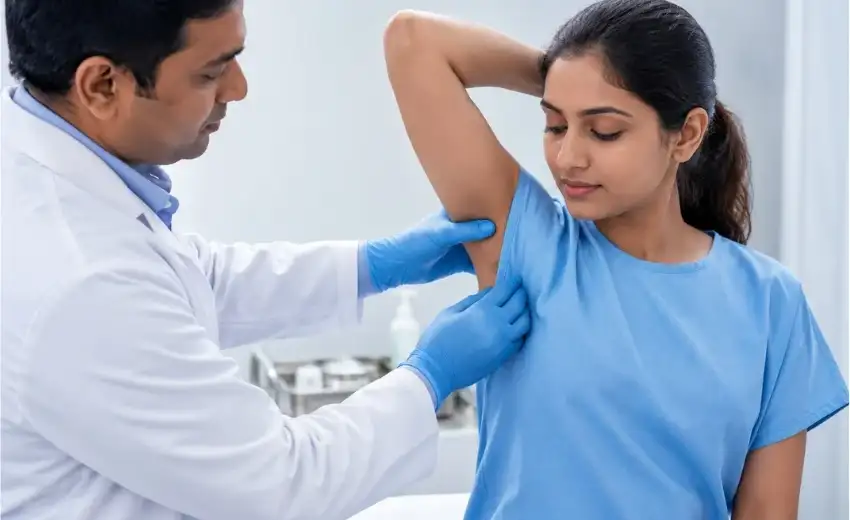
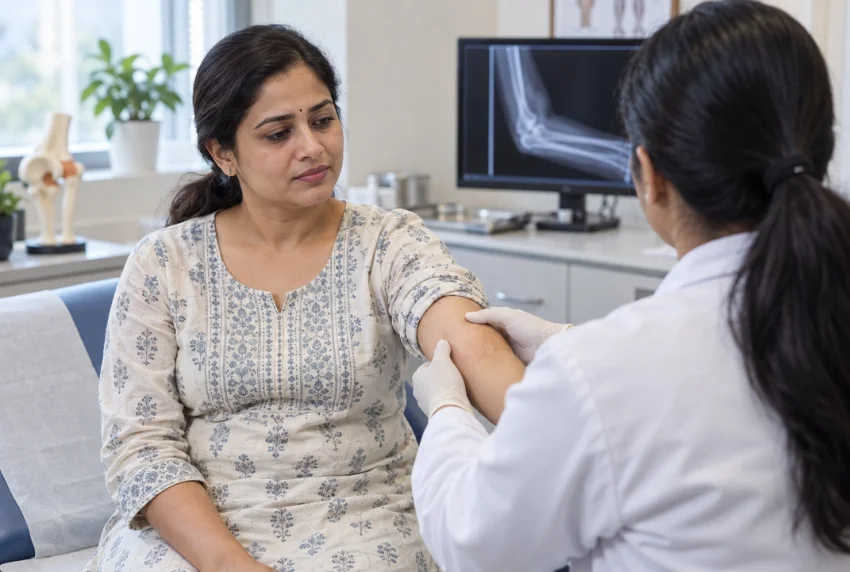
The doctor examines the affected area and reviews symptoms, medical history and other relevant factors.
Imaging
Depending on the tumour, imaging may include:
- Ultrasound
- X-ray
- CT scan
- MRI
- PET-CT
- Bone scan
NCI notes that CT, MRI, PET and other imaging methods may be used in the evaluation and staging of soft tissue sarcoma.
Biopsy
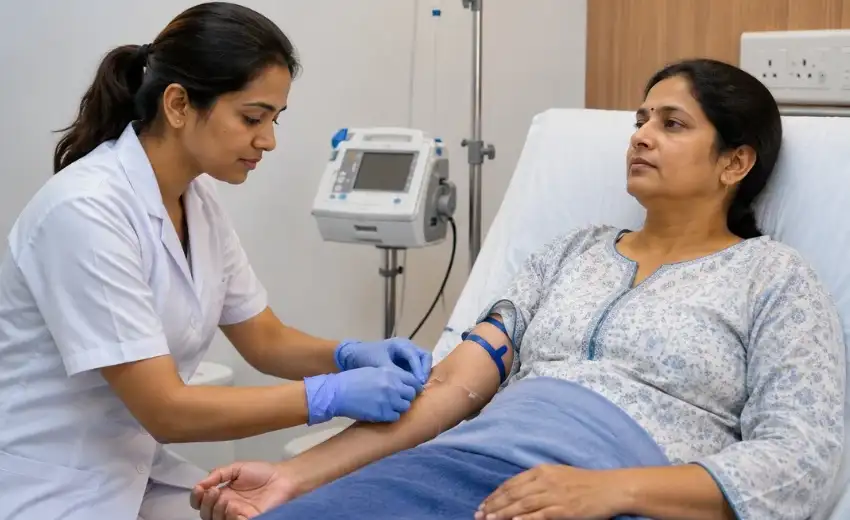
A biopsy involves taking a tissue sample for examination by a pathologist.
For suspected soft tissue sarcoma, proper biopsy planning is particularly important because the biopsy pathway can affect subsequent surgery. NCI recommends appropriate image-guided core-needle biopsy or planned incisional biopsy in selected situations, with review by a pathologist experienced in sarcoma diagnosis.
Pathology
The pathology report helps determine the specific tumour type and other characteristics that can influence treatment.
Why Is Accurate Diagnosis Important?
Not every lump or skin lesion is cancer.
Different tumours require different approaches.
For example:
- A benign skin lesion may require no cancer treatment.
- A small skin cancer may be treated with local surgery.
- A soft tissue sarcoma may require wide surgical excision and sometimes radiation.
- A bone cancer may require surgery with chemotherapy and/or other treatment depending on its type and stage.
Therefore, treatment should begin only after the diagnosis has been properly established.
7 Key Treatment Options for Skin, Soft Tissue and Bone Tumours
1. Surgery
Surgery is an important treatment option for many localized skin cancers, soft tissue sarcomas and primary bone cancers.
The type of surgery depends on the tumour.
Skin Cancer Surgery
Depending on the skin cancer, surgery may include:
- Simple surgical excision
- Mohs micrographic surgery
- Other local surgical procedures
NCI lists surgical excision and Mohs micrographic surgery among treatments used for certain skin cancers.
Soft Tissue Sarcoma Surgery
Surgical removal is a major treatment approach for many soft tissue sarcomas.
The goal is to remove the tumour with appropriate margins while preserving function whenever possible.
NCI identifies surgery as the most common treatment for soft tissue sarcoma.
Bone Cancer Surgery
Surgery is commonly an important component of treatment for primary bone cancer.
Depending on the tumour location, limb-sparing surgery may sometimes be possible.
NCI notes that advances in surgical techniques have enabled many patients with bone cancer affecting an arm or leg to avoid radical limb removal, although reconstruction may be needed after limb-sparing surgery.
2. Radiation Therapy
Radiation therapy uses high-energy radiation to damage cancer cells.
It may be used:
- Before surgery
- After surgery
- As part of treatment for selected unresectable tumours
- For selected recurrent cancers
- To control symptoms in certain advanced cancers
For soft tissue sarcoma, radiation may be combined with surgery in selected patients to improve local tumour control.
Radiation is not appropriate for every tumour, and its use depends on the tumour type, location and treatment plan.
3. Chemotherapy
Chemotherapy uses anticancer medicines to destroy cancer cells or stop them from multiplying.
It may be used:
- Before surgery
- After surgery
- For certain advanced cancers
- For specific bone cancers
- For selected soft tissue sarcomas
For some primary bone cancers such as osteosarcoma, chemotherapy may be given before or after surgery depending on the clinical situation.
The type and schedule of chemotherapy depend on the tumour’s pathology and stage.
4. Targeted Therapy
Targeted therapy uses medicines designed to act on specific molecules or pathways involved in cancer growth.
It may be considered for selected cancers when appropriate targets are identified.
NCI lists targeted therapies among treatment options for soft tissue sarcoma and also lists targeted drugs used for certain skin cancers.
Targeted therapy is not suitable for every patient and usually depends on tumour type and relevant molecular or pathological information.
5. Immunotherapy
Immunotherapy uses medicines that help the immune system recognize and respond to cancer.
It may be considered for selected cancers and specific clinical situations.
NCI includes immunotherapy among treatment approaches for certain soft tissue sarcomas.
Whether immunotherapy is appropriate depends on the tumour type, stage, previous treatment and other patient-specific factors.
6. Limb-Sparing Surgery and Reconstruction
For selected bone and soft tissue tumours affecting an arm or leg, limb-sparing surgery may be considered.
The objective is to remove the tumour while preserving as much useful limb function as clinically possible.
Depending on the amount of tissue or bone removed, reconstruction may involve:
- Bone graft
- Soft tissue reconstruction
- Prosthetic reconstruction
- Other reconstructive techniques
NCI notes that limb-sparing procedures may be combined with radiation or chemotherapy and that reconstruction may be required to restore limb function.
7. Multidisciplinary Cancer Treatment
Some patients require a combination of treatments.
Treatment planning may involve:
- Surgical oncology
- Medical oncology
- Radiation oncology
- Radiology
- Pathology
- Plastic or reconstructive surgery
- Orthopaedic oncology
- Rehabilitation specialists
- Other specialists depending on the tumour
For soft tissue sarcoma, NCI emphasizes multidisciplinary staging and treatment planning.
A multidisciplinary approach can help the team evaluate surgery, radiation, chemotherapy and other treatments together rather than considering each treatment in isolation.
How Is Soft Tissue Sarcoma Surgery Planned?
Before Skin, Soft Tissue and Bone Cancer Treatment in Surat, a suspected soft tissue sarcoma requires careful assessment.
Treatment planning may involve:
- Imaging of the tumour
- Appropriate biopsy
- Pathology review
- Cancer staging
- Assessment of tumour location
- Evaluation of nearby structures
- Surgical planning
- Consideration of radiation or systemic treatment
The biopsy should be planned carefully because its location can affect future surgery. NCI specifically recommends coordination among relevant specialists when planning the initial biopsy and treatment.
How Is Bone Cancer Surgery Planned?
Bone cancer surgery depends on:
- Cancer type
- Tumour size
- Tumour location
- Stage
- Nearby tissue involvement
- Whether the tumour has spread
- Overall health
In selected patients, limb-sparing surgery may be possible.
The treatment plan may also include chemotherapy or radiation therapy depending on the type of bone cancer.
How Is Skin Cancer Treatment Planned?
Skin cancer treatment depends heavily on the specific type.
The doctor may consider:
- Type of skin cancer
- Size
- Location
- Depth
- Whether it has spread
- Previous treatment
- Overall health
For some skin cancers, surgical excision or Mohs micrographic surgery may be used. Other cases may require radiation, topical treatment or other therapies.
What Is Recovery Like After Tumour Surgery?
Recovery depends on the type and extent of surgery.
Factors that can affect recovery include:
- Tumour location
- Size of the surgery
- Reconstruction required
- Patient’s overall health
- Whether radiation or chemotherapy is also required
- Whether a limb or major structure was involved
Some patients may require:
- Wound care
- Physiotherapy
- Occupational therapy
- Nutritional support
- Pain management
- Mobility rehabilitation
- Follow-up imaging
The treating team can provide individualized recovery instructions.
Can Skin, Soft Tissue or Bone Cancer Be Treated Successfully?
Treatment outcomes vary significantly.
They depend on:
- Tumour type
- Cancer stage
- Tumour grade
- Location
- Size
- Whether complete surgical removal is possible
- Whether cancer has spread
- Response to treatment
- Overall health
No single treatment is appropriate for every patient, and no treatment can guarantee the same result for everyone.
A detailed diagnosis and individualized treatment plan are therefore essential.
When Should You See a Cancer Specialist?
Consider medical evaluation for:
- A growing lump
- A persistent unexplained swelling
- A skin lesion that changes or does not heal
- Persistent bone pain
- A new lump near a bone
- Unexplained bleeding from a skin lesion
- A tumour detected on imaging
- A biopsy showing an abnormal or malignant tumour
A lump or lesion does not automatically mean cancer. However, persistent or progressive changes should not be ignored.
Skin, Soft Tissue and Bone Cancer Treatment in Surat with Dr. Priyansh Jain
Skin, Soft Tissue and Bone Cancer Treatment in Surat requires accurate diagnosis and individualized treatment planning because these tumours can differ significantly in their biology, location and treatment requirements.
Dr. Priyansh Jain is a Surgical Oncologist in Surat providing cancer surgery and oncology care at Naman Cancer Clinic & Research Centre.
For patients with suspected or confirmed tumours, treatment planning may involve assessment of:
- Tumour type
- Biopsy findings
- Imaging
- Cancer stage
- Tumour location
- Surgical feasibility
- Need for additional treatment
The appropriate treatment can then be discussed according to the patient’s individual clinical situation.
Frequently Asked Questions
1. What is Skin, Soft Tissue and Bone Cancer Treatment in Surat?
Skin, Soft Tissue and Bone Cancer Treatment in Surat refers to the diagnosis and treatment of cancers affecting the skin, soft tissues and bones. Treatment depends on the exact tumour type, location, stage and overall health.
2. Is every soft tissue tumour cancer?
No. Some soft tissue tumours are benign, while others are malignant. A proper medical evaluation and, when required, biopsy are necessary to determine the diagnosis.
3. What is soft tissue sarcoma?
Soft tissue sarcoma is a group of cancers that develop in soft tissues such as muscle, fat, connective tissue, blood vessels, nerves and related structures.
4. What is the main treatment for soft tissue sarcoma?
Surgery is an important treatment for many soft tissue sarcomas. Depending on the tumour’s type and stage, radiation therapy, chemotherapy, targeted therapy or immunotherapy may also be considered.
5. Is bone cancer treated with surgery?
Surgery is commonly an important component of treatment for primary bone cancer. Depending on the type and stage, chemotherapy, radiation therapy or other treatments may also be used.
6. What is limb-sparing surgery?
Limb-sparing surgery removes a tumour from an arm or leg while attempting to preserve the limb and its useful function. Reconstruction may be needed after the tumour is removed.
7. What are the symptoms of a soft tissue tumour?
A soft tissue tumour may appear as a new or growing lump or swelling. Pain or movement problems can occur depending on its location. A persistent or growing lump should be medically assessed.
8. What are common symptoms of bone cancer?
Possible symptoms include persistent bone pain, swelling, a lump or difficulty moving a nearby joint. These symptoms can have many causes, so proper evaluation is necessary.
9. Can skin cancer require surgery?
Yes. Depending on the type and characteristics of the skin cancer, treatment may include surgical excision or Mohs micrographic surgery, among other options.
10. When should I consult a cancer surgeon in Surat?
You should consider consultation for a growing lump, suspicious skin lesion, persistent unexplained bone pain, an abnormal biopsy or a tumour detected on imaging.
Conclusion
Skin, Soft Tissue and Bone Cancer Treatment in Surat depends on an accurate diagnosis, tumour type, location, stage and the patient’s overall health. Skin cancers, soft tissue sarcomas and primary bone cancers are different conditions and therefore require individualized treatment plans.
Depending on the diagnosis, treatment may include surgery, radiation therapy, chemotherapy, targeted therapy, immunotherapy or a combination of treatments.
For selected soft tissue and bone tumours, surgery can be an important part of treatment, while reconstruction and rehabilitation may also be required to preserve function.
If you or a family member has a persistent lump, suspicious skin lesion, unexplained bone pain or a confirmed tumour, timely medical evaluation can help establish the diagnosis and identify appropriate treatment options.
Dr. Priyansh Jain at Naman Cancer Clinic & Research Centre, Surat, provides surgical oncology consultation and individualized cancer treatment planning based on each patient’s diagnosis and clinical needs.
Also read,
Dr Priyansh Jain
Surgical Oncologist (Oncosurgeon) – Naman Cancer Clinic & Research Centre, Surat
Also read: Advanced Oncoplastic Breast Surgery with LICAP & LTAP Flaps
Also read: Breast Conservation Surgery with MICAP Flap Reconstruction for Breast Cancer
Also read: Robotic Cancer Surgery
Facebook Link: https://www.facebook.com/DrpriyanshOncologist/
Instagram: https://www.instagram.com/dr_priyanshjain/