Liver Cancer Surgery in Surat: 7 Key Treatment Options Explained
Understanding Liver Cancer Surgery, Treatment Planning, Recovery and Personalized Surgical Care
Liver Cancer Surgery in Surat may be considered for selected patients depending on the type and stage of liver cancer, tumour size and location, whether the cancer has spread, overall health, and how well the liver is functioning. Surgical treatment may involve removing part of the liver, while liver transplantation may be considered in specific situations. Other treatments such as ablation or embolization may also be appropriate depending on the individual diagnosis.
Understanding the available treatment options can help patients and families make informed decisions after diagnosis. At Naman Cancer Clinic & Research Centre, Dr. Priyansh Jain provides personalized cancer care and surgical oncology guidance for patients requiring evaluation and treatment planning in Surat.
What Is Liver Cancer?
Liver cancer develops when abnormal cells in the liver grow uncontrollably. The most common primary liver cancer in adults is hepatocellular carcinoma (HCC), although other types of liver cancer can also occur.
Liver cancer may be associated with underlying liver conditions, including chronic liver disease and cirrhosis. However, every patient’s situation is different, and diagnosis requires appropriate medical evaluation.
The treatment plan depends on several important factors, including:
- Type of liver cancer
- Tumour size
- Number of tumours
- Tumour location
- Whether the cancer has spread
- Liver function
- Presence of cirrhosis or other liver disease
- Overall health and fitness for treatment
NCI notes that treatment selection for primary liver cancer is influenced by tumour characteristics and functional liver reserve.
Why Is Liver Cancer Surgery Important?
For selected patients with localized liver cancer, surgery can be an important treatment approach.
A surgical procedure may remove the part of the liver containing the tumour while preserving enough healthy liver tissue to maintain liver function.
The liver has a unique ability to regenerate after part of it is removed. However, whether a patient can safely undergo liver resection depends on the amount and quality of the remaining liver, tumour location and other clinical factors.
Therefore, Liver Cancer Surgery in Surat should always begin with detailed evaluation and individualized treatment planning rather than applying the same procedure to every patient.
7 Key Treatment Options for Liver Cancer
1. Liver Resection or Partial Hepatectomy
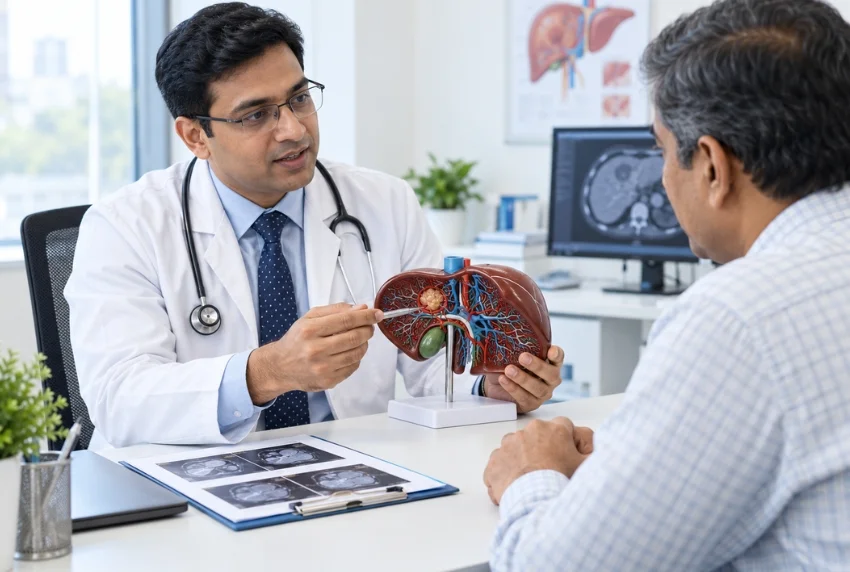
Liver resection, also called partial hepatectomy, involves removing the part of the liver containing the cancer.
Depending on the tumour’s location and extent, the surgeon may remove:
- A wedge-shaped portion of the liver
- A liver segment
- A lobe
- A larger portion when clinically appropriate
The objective is to remove the cancer while preserving sufficient functioning liver tissue.
NCI describes partial hepatectomy as removal of the part of the liver where the cancer is located, which may include a wedge, lobe or larger portion of the liver.
2. Liver Transplantation
For selected patients, a liver transplant may be considered.
During transplantation, the diseased liver is removed and replaced with a healthy donor liver.
Liver transplantation may be considered in specific patients with liver-limited cancer, particularly when liver function is significantly impaired or resection is not the most suitable option.
Eligibility depends on multiple clinical factors, including tumour characteristics, liver function and transplant criteria.
A liver transplant is therefore not appropriate for every person diagnosed with liver cancer.
3. Ablation Therapy
Ablation is a treatment that destroys tumour tissue without removing the entire tumour-bearing portion of the liver.
Depending on the clinical situation, techniques may include:
- Radiofrequency ablation
- Microwave ablation
- Cryoablation
- Other specialized ablation techniques
Ablation may be considered when surgery is not feasible or when it offers an appropriate treatment option for a selected tumour.
The suitability of ablation depends on tumour size, location, number of lesions and the patient’s overall liver condition.
4. Embolization and Chemoembolization
Some liver cancers receive much of their blood supply through the hepatic artery.
Embolization involves blocking blood flow to the tumour through an artery. In certain cases, chemotherapy may be combined with embolization, known as transarterial chemoembolization (TACE).
These treatments are generally considered when surgery or ablation is not appropriate and depend on the stage of the disease and liver function.
NCI lists transarterial embolization and TACE among treatment approaches for selected patients with locally advanced liver cancer.
5. Systemic Cancer Treatment
Not every liver cancer can be treated with surgery.
When cancer is advanced, has spread beyond the liver, or cannot be safely removed, systemic treatments may become part of the treatment plan.
Depending on the cancer type and individual circumstances, systemic treatment can include:
- Immunotherapy
- Targeted therapy
- Other anticancer medicines
The exact treatment should be determined by the oncology team after reviewing the diagnosis, stage, liver function and other medical factors.
6. Multidisciplinary Cancer Treatment
Liver cancer treatment may require more than one type of therapy.
Depending on the patient’s condition, treatment planning can involve:
- Surgical oncology
- Medical oncology
- Hepatology
- Radiology
- Interventional radiology
- Pathology
- Transplant specialists
- Nutrition and supportive care
A multidisciplinary approach can help doctors evaluate whether surgery, ablation, transplantation, systemic treatment or a combination of therapies is most appropriate.
7. Follow-Up and Recurrence Monitoring
Treatment does not necessarily end when surgery is completed.
Patients may require regular follow-up to monitor:
- Liver function
- Recovery after surgery
- Imaging findings
- Tumour markers when clinically appropriate
- Possible recurrence
- Overall health
The follow-up schedule depends on the type and stage of cancer, treatment received and individual risk factors.
Who May Be a Candidate for Liver Cancer Surgery?
Not every patient with liver cancer is a candidate for surgery.
A surgical oncologist may evaluate:
- Tumour size
- Number of tumours
- Tumour location
- Involvement of blood vessels
- Whether cancer has spread outside the liver
- Liver function
- Presence and severity of cirrhosis
- Overall physical condition
- Previous treatments
For localized hepatocellular carcinoma, surgical resection may be considered when the tumour can be removed while leaving adequate functional liver tissue.
How Is Liver Cancer Surgery Planned?
Before Liver Cancer Surgery in Surat, patients generally undergo detailed evaluation.
Depending on the diagnosis, evaluation may include:
Medical History and Physical Examination
The doctor reviews symptoms, previous illnesses, medications, liver disease history and overall health.
Blood Tests
Blood investigations may help evaluate liver function and other relevant clinical parameters.
Imaging
Imaging such as CT or MRI can help determine tumour size, location, number and relationship with important blood vessels.
Cancer Staging
Staging helps determine whether the disease is localized or has spread and assists in selecting an appropriate treatment strategy.
Liver Function Assessment
Liver function is particularly important when considering liver resection because sufficient healthy liver tissue must remain after surgery.
What Happens During Liver Cancer Surgery?
The exact surgical approach depends on the patient’s diagnosis and the planned procedure.
In liver resection, the surgeon removes the tumour-containing portion of the liver while attempting to preserve adequate healthy liver tissue.
Surgery may be performed through an open approach or, in selected situations, using minimally invasive techniques.
The choice depends on factors such as:
- Tumour location
- Tumour size
- Surgical complexity
- Previous abdominal surgery
- Patient health
- Surgeon and centre expertise
NCI notes that cancer surgery may be performed using open or minimally invasive approaches depending on the specific situation.
What Is Recovery Like After Liver Cancer Surgery?
Recovery varies from patient to patient.
The recovery period may depend on:
- Type of liver surgery
- Extent of liver resection
- Overall health
- Liver function
- Surgical approach
- Presence of other medical conditions
After surgery, the medical team monitors the patient’s recovery, liver function, pain control, nutrition and mobility.
Patients should follow their surgeon’s instructions regarding physical activity, medication, diet, wound care and follow-up appointments.
What Are the Possible Risks of Liver Cancer Surgery?
Like other major surgical procedures, liver surgery can have potential risks.
Depending on the procedure and individual condition, possible complications may include:
- Bleeding
- Infection
- Bile leakage
- Blood clots
- Liver dysfunction
- Fluid accumulation
- Anaesthesia-related complications
- Other surgical complications
The actual risk varies significantly from patient to patient.
A surgeon should explain the potential benefits, risks and alternatives before treatment so that patients can make an informed decision.
Can Liver Cancer Be Completely Removed by Surgery?
In selected patients, surgery can be performed with the intention of completely removing localized liver cancer.
However, surgery is not suitable for every patient, and cancer can sometimes recur after treatment.
The possibility of complete tumour removal depends on factors such as tumour stage, location, spread, liver function and overall health.
Therefore, patients should not assume that surgery is automatically the right treatment simply because a tumour has been detected.
Is Liver Cancer Surgery the Same for Every Patient?
No.
Liver cancer surgery must be individualized.
Two patients with liver cancer may have completely different treatment plans because their:
- Tumour sizes differ
- Tumour locations differ
- Liver functions differ
- Number of tumours differ
- Underlying liver conditions differ
- Overall health differs
This is why detailed evaluation by a qualified cancer specialist is important before deciding on surgery.
Liver Cancer Surgery in Surat with Dr. Priyansh Jain
Liver Cancer Surgery in Surat requires careful assessment of the tumour, liver function and overall health before selecting a treatment strategy.
Dr. Priyansh Jain is a Consultant Surgical Oncologist at Naman Cancer Clinic & Research Centre in Surat. His practice includes gastrointestinal cancer care, cancer surgery and personalized oncology treatment planning.
Patients can receive guidance regarding diagnosis, staging, surgical options and other cancer treatment approaches based on their individual condition.
The goal of treatment planning is to select an appropriate approach while considering both cancer control and the patient’s overall health.
When Should You Consult a Liver Cancer Specialist in Surat?
You should seek medical evaluation if you have:
- A confirmed liver tumour
- Abnormal liver imaging
- Persistent unexplained abdominal symptoms
- Jaundice
- Unexplained weight loss
- A history of chronic liver disease
- Cirrhosis
- Hepatitis-related liver disease
- An abnormal liver-related blood test
- A previous diagnosis of liver cancer
A confirmed or suspected liver tumour should be evaluated by an appropriate medical team rather than managed through self-diagnosis.
Frequently Asked Questions
1. What is Liver Cancer Surgery in Surat?
Liver Cancer Surgery in Surat refers to surgical treatment for selected patients with liver cancer. It may involve partial liver removal or other surgical procedures depending on the tumour and liver condition.
2. What is liver resection surgery?
Liver resection is a surgical procedure in which the surgeon removes the part of the liver containing the tumour while preserving adequate healthy liver tissue.
3. Is liver cancer always treated with surgery?
No. Surgery is only one treatment option. Depending on the cancer stage and liver function, treatment may include ablation, embolization, systemic therapy, transplantation or other approaches.
4. What is a partial hepatectomy?
A partial hepatectomy is surgery to remove part of the liver containing the cancer. The amount removed depends on the tumour’s size, location and extent.
5. When is liver transplantation considered?
Liver transplantation may be considered for selected patients with liver-limited cancer when clinical and transplant criteria are met. It is not suitable for every liver cancer patient.
6. What tests are needed before liver cancer surgery?
Depending on the case, doctors may recommend blood tests, CT or MRI imaging, liver-function assessment, cancer staging and other investigations required for treatment planning.
7. How long does liver cancer surgery recovery take?
Recovery varies depending on the type and extent of surgery, the patient’s health and liver function. The treating surgical team can provide a more individualized recovery estimate.
8. Can liver cancer return after surgery?
Yes. Liver cancer can recur after treatment in some patients. Regular follow-up and appropriate monitoring are therefore important after surgery.
9. How do I find a Liver Cancer Surgeon in Surat?
Patients should consider a qualified surgical oncologist with appropriate experience in cancer surgery and should undergo a detailed evaluation before selecting a treatment plan.
10. Is Liver Cancer Surgery in Surat suitable for everyone?
No. Liver Cancer Surgery in Surat is considered based on tumour characteristics, liver function, overall health, cancer stage and whether complete or appropriate surgical treatment is feasible.
Conclusion
Liver Cancer Surgery in Surat can be an important treatment option for selected patients, particularly when liver cancer is localized and the tumour can be safely removed while preserving adequate liver function.
However, surgery is not the same for every patient. Liver resection, liver transplantation, ablation, embolization and systemic treatments may each have a role depending on the diagnosis.
If you or a family member has been diagnosed with liver cancer or a liver tumour, a detailed consultation with a qualified surgical oncologist can help you understand the diagnosis, available treatment options and next steps.
Dr. Priyansh Jain at Naman Cancer Clinic & Research Centre, Surat, provides personalized cancer evaluation and surgical oncology guidance based on each patient’s individual condition.
Also read,
Dr Priyansh Jain
Surgical Oncologist (Oncosurgeon) – Naman Cancer Clinic & Research Centre, Surat
Also read: Advanced Oncoplastic Breast Surgery with LICAP & LTAP Flaps
Also read: Breast Conservation Surgery with MICAP Flap Reconstruction for Breast Cancer
Also read: Robotic Cancer Surgery
Facebook Link: https://www.facebook.com/DrpriyanshOncologist/
Instagram: https://www.instagram.com/dr_priyanshjain/