
Cancer Stages Explained: Stage 1 to Stage 4 Diagnosis and Treatment
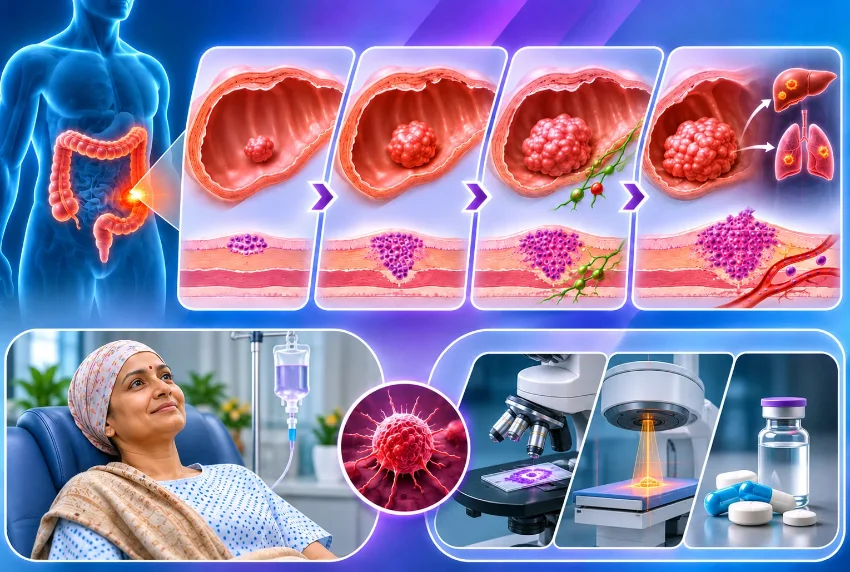
Understand the different stages of cancer, the TNM staging system, diagnostic tests and how doctors use cancer staging to plan an appropriate treatment approach.
From Stage 1 to Stage 4: Understanding Cancer with Greater Clarity.
Cancer Stages help doctors understand how far cancer has developed and whether it has spread from its original location to nearby tissues, lymph nodes or distant parts of the body. From Stage 1 to Stage 4, each stage provides important information that helps guide further investigations and treatment planning.
Understanding the stages of cancer can help patients and families make sense of a diagnosis and discuss suitable care options with their medical team. If you or a family member has received a cancer diagnosis, consulting a qualified specialist such as Dr. Priyansh Jain, Surgical Oncologist in Surat, can help you understand the diagnosis and possible next steps.
What Are Cancer Stages?
Cancer staging is the process doctors use to describe the extent of cancer in the body. It generally considers the size and location of the primary tumour, whether nearby lymph nodes are involved and whether cancer has spread to distant organs.
The stage provides a standard way for healthcare professionals to communicate information about a cancer diagnosis and helps guide treatment planning.
Many solid tumours are described using stages from 0 to IV. These may also be written as Stage 0 to Stage 4.
However, not every cancer follows the same staging system. Some blood cancers, brain tumours and other specific cancers use different classification methods. Therefore, the meaning of a particular stage depends on the cancer type.
Why Is Cancer Staging Important?
Understanding Cancer Stages is an important part of cancer diagnosis and treatment planning. It provides doctors with information about the extent of the disease and helps them consider appropriate treatment options.
Some important reasons for cancer staging include:
1. Understanding the Extent of Cancer
Staging helps doctors determine whether cancer is limited to its original location, has reached nearby tissues or lymph nodes, or has spread to distant parts of the body.
2. Planning Appropriate Treatment
The cancer stage, together with the cancer type and other clinical findings, helps doctors evaluate treatment options. These may include surgery, chemotherapy, radiation therapy, targeted therapy, immunotherapy or a combination of approaches.
3. Evaluating the Disease
Staging provides a structured description of the disease. It helps healthcare professionals assess the extent of cancer and communicate findings during consultations and treatment discussions.
4. Supporting Communication Between Specialists
Cancer care may involve a team of medical professionals. A clearly documented stage helps specialists discuss the diagnosis and coordinate an appropriate care plan.
5. Understanding Prognosis
Cancer stage is one factor doctors consider when discussing prognosis. However, it does not determine an individual’s outcome by itself. Cancer type, grade, molecular characteristics, overall health and response to treatment can also influence prognosis.
What Are the Different Stages of Cancer?
Cancer is commonly grouped into Stage 0, Stage 1, Stage 2, Stage 3 and Stage 4 for many solid tumours.
The following explanations provide a general overview. The exact criteria for each stage vary according to the type of cancer and its specific staging guidelines.
Stage 0 Cancer: Carcinoma In Situ
Stage 0 is commonly known as carcinoma in situ. It describes abnormal cells that remain in the place where they originally developed and have not invaded nearby tissue.
In certain cancers, these cells may have the potential to develop into invasive cancer if left untreated. However, the significance and recommended management depend on the specific condition.
Common characteristics:
- Abnormal cells are present in a particular tissue layer.
- There is no evidence of invasion into nearby tissue.
- The findings may be described as carcinoma in situ.
- Doctors evaluate the condition to determine suitable management.
Treatment considerations:
Treatment depends on the cancer type, location and individual clinical findings. Options may include monitoring, local removal, surgery or other appropriate treatments.
Stage 0 should not automatically be treated as equivalent to invasive Stage 1 cancer.
Stage 1 Cancer: Early or Localized Cancer
Stage 1 generally describes an early form of invasive cancer that is limited to a relatively small area or has limited local involvement.
For many cancers, there is no distant spread at this stage. However, the exact criteria, including whether nearby lymph nodes may be involved, vary by cancer type.
Common characteristics:
- Cancer is generally limited to the original area.
- The tumour may be relatively small.
- There is no distant metastasis in typical Stage 1 solid tumour classifications.
- The disease may be suitable for localized treatment approaches.
Treatment options:
Depending on the cancer type and location, treatment may include:
- Surgery to remove the tumour.
- Radiation therapy.
- Other cancer-specific treatments.
- Additional treatment after surgery when clinically indicated.
Early-stage cancer may have several effective treatment options. However, the appropriate approach depends on the individual diagnosis rather than the stage number alone.
Stage 2 Cancer: More Extensive Local Disease
Stage 2 generally indicates a larger tumour or greater local involvement compared with Stage 1. In certain cancers, nearby lymph nodes may also be involved.
The exact definition varies significantly between different cancer types. A Stage 2 diagnosis in one cancer does not necessarily represent the same disease extent as Stage 2 in another.
Common characteristics:
- The tumour may be larger than in Stage 1.
- Cancer may have grown into nearby tissues.
- Some cancer types may involve nearby lymph nodes.
- Distant spread is generally absent in typical Stage 2 solid tumour classifications.
Treatment options:
Depending on the cancer type and clinical findings, treatment may involve:
- Surgery.
- Chemotherapy.
- Radiation therapy.
- Targeted therapy or immunotherapy when appropriate.
- A combination of treatments before or after surgery.
Doctors consider the tumour’s location, biological characteristics and other test results before recommending a treatment plan.
Stage 3 Cancer: Regional or More Advanced Local Disease
Stage 3 generally describes cancer that has become more extensive locally or has spread to regional lymph nodes or nearby structures.
The exact criteria depend on the cancer type. In some cancers, Stage 3 may involve substantial lymph node involvement, while in others it may reflect local invasion.
Common characteristics:
- Cancer may have grown into nearby tissues or structures.
- Regional lymph nodes may be involved.
- The tumour may be more extensive than in earlier stages.
- The disease generally has not reached distant organs under the usual Stage 3 classification.
Treatment options:
Treatment may involve a combination of approaches, such as:
- Surgery, when appropriate.
- Chemotherapy.
- Radiation therapy.
- Targeted therapy for eligible cancers.
- Immunotherapy for selected cancer types.
- Treatment before or after surgery, depending on the clinical situation.
A multidisciplinary medical team may evaluate the available options to determine the most suitable sequence of treatment.
Stage 4 Cancer: Advanced or Metastatic Cancer
Stage 4 generally refers to cancer that has spread from its original location to distant organs or other distant parts of the body. This process is known as metastasis.
For example, certain cancers may spread to the liver, lungs, bones or brain. The organs involved depend on the original cancer type.
Common characteristics:
- Cancer has spread to distant parts of the body.
- One or more distant organs may be involved.
- Treatment planning considers both the original cancer and the areas affected by its spread.
- Additional investigations may be needed to understand the extent of disease.
Treatment options:
Treatment for Stage 4 cancer depends on the primary cancer type, sites of spread, tumour characteristics, previous treatment and the patient’s overall health.
Depending on the diagnosis, options may include:
- Chemotherapy.
- Targeted therapy.
- Immunotherapy.
- Hormone therapy for selected cancers.
- Radiation therapy for specific symptoms or affected areas.
- Surgery in carefully selected situations.
- Supportive and palliative care to manage symptoms and maintain quality of life.
Stage 4 cancer does not mean that every patient has the same prognosis or treatment options. Some advanced cancers can be managed for extended periods, and treatment goals vary from patient to patient. A specialist can explain the realistic options based on the individual diagnosis.
Understanding the TNM Cancer Staging System
The TNM staging system is widely used to describe the extent of many types of solid tumours.
TNM stands for:
T – Primary Tumour
The letter T describes the size of the primary tumour and how far it has grown into nearby tissues.
Depending on the cancer type, it may be recorded as T0, T1, T2, T3 or T4. A higher number generally indicates a larger tumour or greater local extension.
N – Regional Lymph Nodes
The letter N describes whether cancer has spread to nearby regional lymph nodes.
It may be recorded as N0, N1, N2 or N3, depending on the number, location and extent of lymph node involvement.
M – Distant Metastasis
The letter M indicates whether cancer has spread to distant parts of the body.
- M0 generally means there is no evidence of distant metastasis.
- M1 indicates that distant metastasis is present.
The T, N and M findings are combined according to cancer-specific staging rules to determine the overall stage.
For example, a TNM classification such as T1N0M0 provides information about the primary tumour, regional lymph nodes and distant spread. Its final stage grouping depends on the particular cancer.
How Is the Stage of Cancer Diagnosed?
Cancer staging is determined using information from different medical investigations. The tests recommended depend on the type of cancer, its location and the patient’s clinical condition.
1. Physical Examination
The doctor reviews symptoms, examines the affected area and checks for findings such as lumps, swelling or enlarged lymph nodes.
2. Biopsy and Pathology Examination
A biopsy involves collecting a sample of suspicious tissue or cells for laboratory examination. A pathologist studies the sample to identify the cancer type and other relevant characteristics.
A biopsy helps establish the diagnosis, while additional clinical and imaging investigations may be needed to determine the stage.
3. Imaging Tests
Imaging investigations help doctors assess the location and extent of cancer.
Depending on the condition, these may include:
- Ultrasound.
- CT scan.
- MRI.
- PET-CT.
- X-rays.
- Mammography for appropriate breast investigations.
Not every patient requires all these tests.
4. Blood Tests
Blood investigations may help assess general health, organ function and certain cancer-related markers. Their role varies according to the suspected cancer.
Blood tests alone generally cannot establish the stage of most solid tumours.
5. Surgical and Pathological Findings
In certain cases, surgery provides additional information about the tumour and nearby lymph nodes.
The findings may contribute to pathological staging, which is considered alongside the earlier clinical assessment.
What Is the Difference Between Cancer Grade and Cancer Stage?
Cancer grade and cancer stage are two different terms that are sometimes confused.
Cancer stage describes how far the cancer has spread in the body, including tumour size, local extension, lymph node involvement and distant metastasis.
Cancer grade describes how abnormal the cancer cells appear under a microscope and may provide information about their likely biological behaviour.
For example, a tumour may be described as a particular stage and grade. Both details help doctors understand the disease, but they describe different characteristics.
Can Cancer Stage Change After Diagnosis?
Cancer staging is generally assigned at the time of diagnosis and documented as the original stage.
If new information becomes available or the cancer later progresses, doctors record those changes separately. The original stage is not simply replaced by a higher stage.
This distinction helps maintain an accurate record of the disease from the time it was first diagnosed.
Does Every Cancer Have the Same Staging System?
No. Different cancers may use different staging systems.
Many solid tumours use the TNM system, but certain cancers have specific classification methods. Some blood cancers, brain tumours and other conditions may not follow the standard Stage 1 to Stage 4 approach in the same way.
Therefore, patients should avoid comparing their stage directly with another person’s diagnosis unless they have the same cancer type and relevant clinical details.
Does a Higher Cancer Stage Always Mean There Are No Treatment Options?
No. A higher stage generally indicates a greater extent of disease, but it does not automatically mean that treatment is unavailable.
Treatment options depend on several factors, including:
- The original cancer type.
- The location and extent of the disease.
- Tumour grade and biological characteristics.
- Molecular or biomarker test results, where relevant.
- Previous treatment and response.
- The patient’s general health and preferences.
Even when cancer has spread to distant organs, doctors may consider different treatments to control the disease, manage symptoms and support quality of life.
Patients should discuss their individual diagnosis and treatment goals with their medical team.
When Should You Consult a Surgical Oncologist?
A consultation with a qualified cancer specialist may be helpful when:
- A biopsy report confirms a cancer diagnosis.
- Imaging investigations identify a suspicious tumour.
- You need an explanation of your cancer stage.
- You want to understand whether surgery may be appropriate.
- You need to discuss available treatment options.
- You want another specialist’s opinion about a recommended treatment plan.
If you have received a cancer diagnosis, keep your biopsy report, imaging reports, blood test results and previous medical records ready for the consultation.
Cancer Staging and Treatment Consultation in Surat
Understanding a cancer diagnosis can be challenging for patients and their families. Knowing the stage, the investigations used to determine it and the available treatment approaches can help make medical discussions clearer.
Dr. Priyansh Jain is a Surgical Oncologist in Surat. Patients seeking guidance about a cancer diagnosis, surgical oncology evaluation or possible treatment options can consult a qualified specialist for an assessment based on their individual medical findings.
During a consultation, the doctor may review the patient’s biopsy report, imaging results, medical history and other relevant investigations before discussing the appropriate next steps.
Patients from Surat and nearby areas of South Gujarat can seek specialist guidance to understand their diagnosis and available care options.
Frequently Asked Questions (FAQs)
1. What are the four main stages of cancer?
Many solid cancers are grouped into four main invasive stages: Stage 1, Stage 2, Stage 3 and Stage 4. Stage 0 is also used for certain non-invasive conditions. The exact definitions vary by cancer type.
2. What is the difference between Stage 1 and Stage 4 cancer?
Stage 1 generally describes cancer with limited local extent, while Stage 4 usually means cancer has spread to distant parts of the body. The exact criteria depend on the cancer type.
3. Is Stage 2 cancer considered early-stage cancer?
Stage 2 is often considered an earlier or intermediate stage compared with Stage 3 and Stage 4, but its exact meaning depends on the type of cancer and the extent of local or regional involvement.
4. Is Stage 3 cancer curable?
The possibility of cure depends on the cancer type, extent of disease, tumour characteristics and response to treatment. Some Stage 3 cancers may be treated with curative intent, while others require different treatment goals.
5. Does Stage 4 cancer mean cancer has spread?
Yes. For most solid cancers, Stage 4 generally indicates distant spread, also known as metastasis. The exact definition and treatment approach depend on the specific cancer.
6. What does TNM mean in cancer staging?
TNM stands for Tumour, Nodes and Metastasis. T describes the primary tumour, N describes regional lymph node involvement and M indicates distant spread.
7. Can a biopsy determine the stage of cancer?
A biopsy helps confirm the diagnosis and identify the cancer type. Additional investigations, such as imaging, clinical examination and sometimes surgical findings, are usually needed to determine the stage.
8. Is cancer grade the same as cancer stage?
No. Grade describes how cancer cells look under a microscope, while stage describes the extent of cancer in the body. Both may help doctors plan treatment.
9. Can cancer spread after treatment?
Some cancers can recur or spread after treatment. Follow-up appointments and recommended investigations help doctors monitor the patient’s condition and identify changes when they occur.
10. Where can I consult a surgical oncologist in Surat?
Patients in Surat can consult a qualified surgical oncologist to discuss their cancer diagnosis, staging reports and possible surgical treatment options. Dr. Priyansh Jain is a Surgical Oncologist in Surat. Bring your medical and imaging reports to the consultation.
Conclusion
Understanding Cancer Stages is an important part of learning about a cancer diagnosis. From Stage 1 to Stage 4, staging helps doctors describe the extent of the disease and consider appropriate treatment options.
The TNM system, biopsy findings, imaging investigations and clinical assessment all contribute to understanding the cancer. However, the meaning of a particular stage and the available treatment options vary depending on the cancer type and individual medical findings.
If you or a family member has been diagnosed with cancer, consult a qualified specialist to understand the diagnosis and discuss the next steps. For patients in Surat and South Gujarat, Dr. Priyansh Jain can be consulted for guidance regarding surgical oncology and appropriate treatment considerations.
Also read,
Dr Priyansh Jain
Surgical Oncologist (Oncosurgeon) – Naman Cancer Clinic & Research Centre, Surat
Also read: Advanced Oncoplastic Breast Surgery with LICAP & LTAP Flaps
Also read: Breast Conservation Surgery with MICAP Flap Reconstruction for Breast Cancer
Also read: Robotic Cancer Surgery
Also read: National Cancer Institute — Childhood Cancers
Facebook Link: https://www.facebook.com/DrpriyanshOncologist/
Instagram: https://www.instagram.com/dr_priyanshjain/